Broad reach or port tack or close hauled or starboard tack?
Its a lot harder than it seems, test yourself here

The training run for this week has been been 100 km. Stats on the left, courtesy of Nike+, one of our sponsors.
b

Broad reach or port tack or close hauled or starboard tack?
Its a lot harder than it seems, test yourself here
The training run for this week has been been 100 km. Stats on the left, courtesy of Nike+, one of our sponsors.
b
Its been quite a hectic 5 months since the start of the year. They say getting to the starting point is the hardest part...and the end of the checklist remains elusive.
Sailing is a challenge balance between project management and maintaining top physical condition on land and training at sea.
Sailing in this part of the world (Asia) still largely an aspirational sport. Sailing events in Asia remain few and far between, yet judging from the response to the teams campaign, this may be just the reason for its appeal.
An involvement in sailing is good for business. Some companies, such as Hardy's, Volvo, Skandia, HSBC Private Bank and Rolex have recognized this, while many others are still to discover the benefits of an involvement in this sport.
André Oszmann, Skandia Group Marketing Director, sums up many of the attributes of sailing:
“ It's a clean and healthy sport, it has a great image and it's also very photogenic and a great way to display the visible part of your brand. And it's very inclusive. Sailors tend to be articulate, they are engaging and they are typically passionate about the sport and daily updates via satellite keep the public excited through out the challenge.
Solo skippers and their teams require technical skill, courage, determination and the flexibility to overcome every challenge nature can deliver and this in turn is associated with sponsors. ”
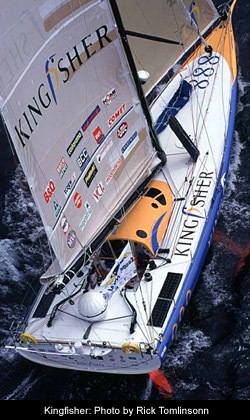
--- Team Commentry
Ocean Based Training:
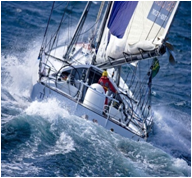
This will consist of sailing in heavy weather conditions in Argentina (the Southern Ocean), Scotland (North Atlantic) and India (Indian Ocean). The aim is to identify and prepare for equipment, design and performance challenges that he will encounter in the Southern Ocean.
Technical Training:
Thousands of miles from land, forces any skipper to be self reliant and capable of carrying out repairs on mission critical equipment such as the desalinator, power generator, sails and mast. The checklist of tasks includes, spares, backup and emergency procedures.
Land-based training:
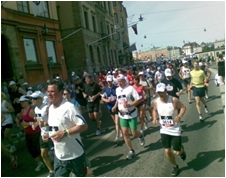
This has been designed to optimize his physical condition so that Bhavik is in the best shape to withstand all the physical challenges.The program includes events such as the London & NY Marathons.
2008
30 Aug, Gotland Rund Yachting Cup, Sweden
01 Sep, Atlantic Training, Spain
01 Nov, NY Marathon, 42.2km, USA
05 Nov, Indian Ocean, Mumbai India
18 Nov, North Atlantic, Scotland
03 Dec, Volvo Ocean Race, Kochi, India
2009
12 Jan, Southern Ocean, Argentina
01 Mar, Vasaloppett Marathon, 90km, Sweden
15 Mar, Marathon DesSables, 254km, Morocco
05 Apr, Flora London Marathon, 42.2 km, London
01 May, Stockholm Marathon, 42.2 km, London
01 Jun, Rolex Fastnet Course, UK
18 Jun, 18,000 km sail, France to India via Cape Hope
01 Nov, Indian Ocean, Mumbai, India
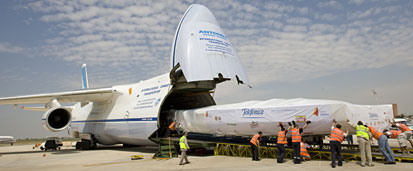
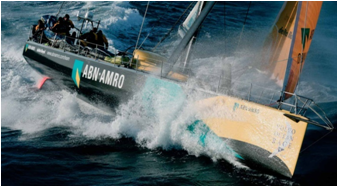
The huge Antonov 124 touched down safely at Alicante’s international airport carrying the hopes of the Spanish bid to win the Volvo Ocean Race for the first time.
fter a three-day odyssey from New Zealand, one of the world’s largest planes, with its very special cargo – the hull of Telefonica Black – was welcomed by a crowd of Spanish journalists, photographers and the Telefonica team’s shore and sailing crew.
The hull emerged from its Antonov cocoon to be carefully lifted on to a truck for the nine km journey to the Telefonica base at the harbour in Alicante, host for the start of the 2008-09 race on 4 October.
The shore crew now plan to have the first of the two Spanish entries in the water by next week after finishing the rig and completing the commissioning.
The arrival in Spain of Telefonica Black marks the culmination of approximately 40,000 man hours of work by a team of 60 people – the boat builders, the Telefónica technical and design teams.

Here is another note on the continued development of the Open 60 class boat. / B
Southern Spars - David Barnaby
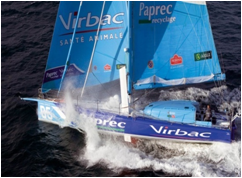
Challenging a sailor’s every ounce of energy and adrenalin, the Open 60 is one of the fastest monohull classes in the world. Moreover this is a class that continues to evolve, explores new design innovations and technology and sets the standards for other classes. The development of the rig in this class is no exception. David Barnaby, a designer for Southern Spars, who resides in Europe, explores some of the advancements in rig design and technology.
Since the inception of the Open 60 class many rig geometries have been developed and presently there are three popular configurations. However several common factors are crucial to a rig’s success regardless of geometry; reliability, rig control, and weight.
Reliability – Crucial in any round the world race, but particularly in the Vendee as a single-handed masthead climb is not easy unless you are an octopus, and being a non-stop race, any unreliable equipment will likely be a handicap for 3 months. With any round the world race there is much talk prior regarding weight savings, and yet for the year after there are many grumblings about reliability.
Control – the key being that the skipper controls the rig and not vice versa. Stiffness without excess weight is crucial. Geometry is also an important factor for all sail configurations because if any of these combinations are compromised by a lack of rig stability, then the performance is less than optimum. In previous generations the rigs have been super light and consequently soft, which has been a function of the ‘no rule’ limit on mast weight. As a result, the yacht experienced poor upwind performance due in part to massive headstay sag. With the development of lighter rigging, stiffer boats, better rig geometries and centreboards, the class has started to attract more attention for its upwind capabilities. Being able to gybe with slackened runners is also a design prerequisite.
Weight – a function of the rule is that if all boats were identical apart from the rig then the boat with the lightest rig would theoretically have the greatest righting moment and therefore potentially be the fastest. This is unlike Volvo or Americas’ Cup where all rigs weigh the same and the only performance gain is drag. History has proven that if applied correctly, righting moment is king.
The Rig Geometries
1) Classic non-rotating rig geometry – 2, 3 or 4 fixed spreaders generally produce the lightest possible package. These rigs provide good control throughout the various sail configurations. Occasionally we see these spreaders able to rotate which eases the torque induced by the mainsail during a gybe.
2) Swinging spreader wing – this has been popularised by the Ecover style package, featuring one or more swinging spreaders, which gives the drag reduction of a wing but has the more ‘locked on’ control characteristics of a classic rig.
3) Deck spreader wing – this is a low drag option due to minimal rigging. The chainplates, being at the end of wide deck spreaders, allow wide shroud angles. This geometry is probably the heaviest option, however interestingly provides the lowest VCG and heeling moment as the deck spreaders are heavy but low down. This geometry has a tendency for instability fore and aft as it is not locked in with spreaders. The only way to stabilise this is by having a longer chord length mast which adds weight. A nice product of the deck spreader geometry is the ability to sheet the reaching sails off the deck struts. http://www.southernspars.com/

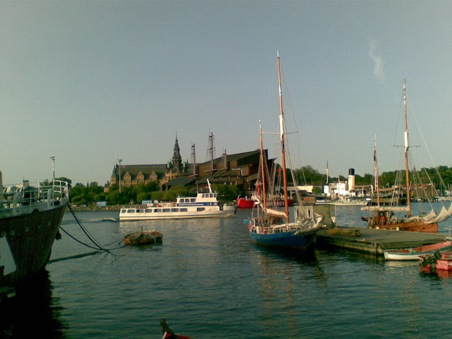
raining...and cloudy...back in London from sunny stockholm--


 Posts
All Comments
Posts
All Comments